
California Teaching Candidates Gain Hands-On Experience to Support and Promote Bilingualism in Classrooms
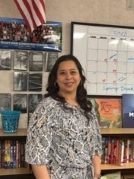

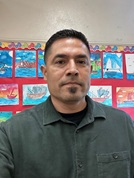
Left to right: Bilingual authorization candidates Lorena Guerrero, Yanfang Yang, and Carlos Campa.
Bilingual authorization teaching candidates across the state are currently leveraging their linguistic skills in K-12 classrooms to advance the academic and social success of multilingual students.
The teaching candidates are completing their field experience, a real-world requirement of the Commission’s revised 2021 Bilingual Authorization Program Standards and new Bilingual Teaching Performance Expectations (BTPEs).
The field experience provides candidates with flexibility and opportunities to experience teaching in different language immersion settings at different grade levels while concurrently working on their teaching credential(s) or adding a bilingual authorization for teachers who already hold a teaching credential.
“To increase the state’s bilingual teaching workforce, we must rethink the meaning of being bilingual and biliterate,” said Fernando Rodríguez-Valls, professor and bilingual authorization program coordinator at California State University, Fullerton, home to one of California’s 48 bilingual teacher preparation programs.
“Many potential bilingual candidates are the byproduct of an English-only system that has questioned the value of their linguistic repertoires and languaging practices. The bilingualism candidates bring to the credential programs showcases their linguistic richness and knowledge.”
Two such candidates are Carlos Campa and Lorena Guerrero, first-generation Mexican Americans and experienced educators whose similar paths led them to pursue bilingual authorizations in Spanish at CSU Fullerton.
“Some (of my) students were caught between two worlds that left them with limited Spanish and English language abilities,” said Campa, who is completing his field experience at Willard F. Payne Elementary School in El Monte, where he teaches.
“As a child, I felt that I lost out on part of my connection to the Spanish language and in turn the culture. As a young adult, I tried to piece back together what I felt I lost early on. If I can help another child keep that connection with their Spanish from ever being lost and they can continue into adulthood and throughout, I’ll feel this was a success.”
Guerrero, a sixth-grade teacher at Baldy View Elementary School in Upland, views earning her bilingual authorization as an investment in the future of students and society.
“By providing ALL students with access to high-quality bilingual education, we, as educators and advocates, are empowering them to reach their full potential and become active and engaged citizens,” Guerrero said.
“I am grateful for schools that are promoting and encouraging Dual Language Immersion and the use of other languages, and I am grateful for universities that find a bilingual authorization to be important and necessary for the preparation of the next generation of citizens in our country.”
Further north at the University of California, Davis, Yanfang Yang is earning her bilingual authorization in Mandarin. Yang is a student teacher at William Land Elementary in Sacramento where she is co-teaching in Mandarin Immersion Programs.
“I grew up in a single-parent home in China’s deaf community, the first in my family to attend university, and those early years navigating communication challenges really shaped who I am,” Yang said.
“At sixteen, I started Sunflower, a high school student organization in Xiamen, China, to tutor underprivileged kids—some with mild hearing issues, others left with grandparents because their parents moved to cities for work. Watching those children light up as education opened doors for them, especially with language support, sparked something in me.”
Yang, who is trilingual in Mandarin, Taiwanese, and English, said that at William Land Elementary, she has already seen how Mandarin Immersion Program students flourish when taught in their native language while acquiring English, fostering both academic success and cultural pride.
“Having a society that promotes and supports plurilingualism exemplifies its commitment to language justice and linguistic equity, diversity, and inclusion,” Rodríguez-Valls said.
“Going beyond neoliberal ideologies that conceptualize bilingualism as a market product, allocating funding in the state budget to support plurilingualism creates opportunities for students to develop linguistic activism and feel confident to fully use their linguistic repertoires.”
The BTPEs support the goals of the California Department of Education’s Global California 2030 planto significantly increase the number of dual language immersion programs, enable half of all K-12 students to gain proficiency in two or more languages, and increase the yearly number of bilingual teacher authorizations.
The Commission has focused a variety of activities on addressing and improving preparation for meeting the needs of students who are English learners and on updating the knowledge and skills required of individuals who teach or provide services to these students.
For guidance on how to obtain a bilingual authorization, interested educators may visit the Commission’s website.
Additional content: Read more about the journeys and experiences that led Campa, Guerrero, and Yang, to pursue their bilingual authorizations.
Q & A with Carlos Campa, Bilingual Authorization Candidate, CSU Fullerton
Share your background and why it is important to you to earn your bilingual authorization.
I am a first generation Mexican-American and the first in my family to attend college and graduate with an undergraduate and graduate degree. Although I grew up with limited academic support from my family, they were able to instill in me a solid work ethic and the importance of understanding family, culture, and values.
Early on in my schooling, I kind of lost touch with the Spanish language. I was encouraged to focus on improving my English language. It wasn’t until my early adult life and my professional work as a therapist when I was able to refocus and reconnect with the Spanish language. I found a calling to work with the Latino community because this was familiar to me and I could easily identify with the population. They were like familia. Here I was able to go back and pick up where I had left off with my Spanish language. It was needed and it was highly valued. I greatly enjoyed this work. But another calling came.
Eventually, I made a transition to the educational field and became an elementary school teacher. I felt that I could be an agent of change and positive influence for more people being in a classroom. Again, I chose to work in a Latino community that reflected my neighborhood growing up. I felt like I wanted to be of service to my community and offer academic support to students on their educational paths.
After being in education for almost 8 years now, I began to recognize a need that students presented with in the classroom. Some students were caught between two worlds that left them with limited Spanish and English language abilities. I believed that I could help bridge this divide by supporting students in bilingual classrooms. To see this through, I was motivated to add the bilingual authorization to my teaching credential. I look forward to one day fulfilling my part in supporting students on their bilingual educational journey.
How do you hope that your bilingual authorization will help the next generation of students?
I hope that my bilingual authorization will help support our next generation of students to keep their Spanish language alive. As a child, I felt that I lost out on part of my connection to the Spanish language and in turn the culture. As a young adult, I tried to piece back together what I felt I lost early on. If I can help another child keep that connection with their Spanish from ever being lost and they can continue into adulthood and throughout, I’ll feel this was a success.
I want students to understand the importance of their language and culture. I would like to help them become fluent and confident with the Spanish language so that they can communicate effectively with their families and the larger surrounding Spanish speaking community in their neighborhoods. There are untapped resources of knowledge within their communities. Family and community members with stories and lived experiences to share. I want students to see the value in their community and its members. Also, being bilingual will provide additional opportunities academically and economically when they are ready to enter the working world.
Is there anything you would like to add?
Something valuable that I learned from my bilingual authorization program is that language is a living language influenced by many factors. The Spanish language that is spoken in our inner cities can include spanglish vocabulary and phrases that can be very different from those spoken in other communities. And, the Spanish that is spoken in whichever community is perfectly beautiful. Language is not static. It is constantly changing, evolving, and adapting. When we communicate with someone we make use of our full linguistic repertoire to ensure that we are heard and understood.
We communicate using words that we know, whether in English, Spanish, or Spanglish. This is translanguaging. And wherever you are in the journey of Spanish language development or acquisition, it is perfectly fine. Speak it as you know best. We celebrate and praise you. Adelante!
Q & A with Lorena Guerrero, Bilingual Authorization Candidate, CSU Fullerton
Share your background and why it is important to you to earn your bilingual authorization.
As a US-born citizen of Mexican parents, I navigated distinct language expectations at home and school. My parents emphasized the use of Spanish only at home, while my first-grade teacher enforced English-only instruction at school. This created a challenging situation where I had to master both languages in a setting where they were largely kept separate. Luckily, the following year, I was placed in a bilingual classroom where both languages were accepted and appreciated. Being allowed to use both languages separate or by switching became a plus for my success. As a product of a public school and a proud teacher, with 28 years of experience in public education, I eagerly anticipate using my Bilingual Authorization to connect with Dual Language Immersion (DLI) students for the next 10 years.
A bilingual authorization added to my multiple subject credential is crucial for several reasons, primarily centered on enhancing student outcomes and fostering equitable educational environments. I am pursuing this authorization to ensure that no student struggles to learn without the support of someone who understands their language and needs.
Firstly, a bilingual authorization allows me to effectively serve the growing population of English Language Learners at my school site. By providing instruction in both their native language and English, I can ensure that these students have access to the curriculum and are able to develop their language skills simultaneously. This approach not only supports academic achievement but also validates students’ cultural and linguistic identities, fostering a sense of belonging and confidence in their educational experience. My goal is to serve as a cultural bridge where I can foster understanding, respect, and pride among students from different backgrounds. This will, in the long run, contribute to a more harmonious and inclusive school and community environment. In addition, students who are English-only in a Dual Language Immersion (DLI) classroom can learn the beauty of a second language, culture, and the support needed.
Secondly, bilingual education promotes cognitive development. Research consistently demonstrates that bilingualism enhances cognitive flexibility, problem-solving skills, and critical thinking abilities. By integrating bilingual instruction into the classroom, I can create a richer and more stimulating learning experience for all students, regardless of their language background.
How do you hope that your bilingual authorization will help the next generation of students?
As an educator working on a Bilingual Authorization, I will use my knowledge to support students so that the achievement gap between English-only and Second Language Learners narrows.
Ultimately, increasing the number of educators with bilingual authorizations is an investment in the future of our students and our society. By providing ALL students with access to high-quality bilingual education, we, as educators and advocates, are empowering them to reach their full potential and become active and engaged citizens. I am grateful for schools that are promoting and encouraging DLI and the use of other languages, and I am grateful for universities that find a bilingual authorization to be important and necessary for the preparation of the next generation of citizens in our country.
SIEMPRE SERÉ ORGULLOSA DE MI CULTURA Y DE I IDIOMA NATAL.
I WILL ALWAYS BE PROUD OF MY CULTURE AND OF MY PRIMARY LANGUAGE.
Q & A with Yanfang Yang, Bilingual Authorization Candidate, UC Davis
Share your background and why it is important to you to earn your bilingual authorization.
I grew up in a single-parent home in China’s deaf community, the first in my family to attend university, and those early years navigating communication challenges really shaped who I am. At sixteen, I started Sunflower, a high school student organization in Xiamen, China, to tutor underprivileged kids—some with mild hearing issues, others left with grandparents because their parents moved to cities for work. Watching those children light up as education opened doors for them, especially with language support, sparked something in me. It showed me how powerful bilingual approaches could be, and that’s when I knew I wanted to make a difference.
That drive led me to a BA in Translation at the University of International Business and Economics and an MA in English Interpreting at Xiamen University, where I explored several languages, including Mandarin, English, Taiwanese, and Sign Language accessibility.
My teaching path took me to Xiamen Foreign Language School, where I taught Mandarin and English to a mix of students, including Han and Uyghur backgrounds, and even won a citywide teaching award for my inclusive style.
Now, as a student teacher at William Land Elementary in Sacramento, I’m co-teaching in Mandarin Immersion Programs, seeing how bilingual education helps kids connect and grow. Earning my Bilingual Authorization (BCLAD) through UC Davis feels essential—it’ll give me the official tools to teach in both languages, bridging gaps for diverse learners. For me, it’s about building on those Sunflower days to create equitable classrooms where every student, especially those from underrepresented backgrounds, can thrive.
How do you hope that your bilingual authorization will help the next generation of students?
My Bilingual Authorization (BCLAD) in Mandarin will empower me to create inclusive, culturally responsive classrooms where the next generation of students—particularly English learners and those from diverse backgrounds—can thrive. At William Land Elementary, I’ve seen how Mandarin Immersion Program (MIP) students flourish when taught in their native language while acquiring English, fostering both academic success and cultural pride. For example, I’ve used bilingual resources and EdTech tools like Arch Chinese and Google Classroom to support a 3rd-grader with limited English proficiency, helping her excel in math while building confidence in ELA through Mandarin scaffolding.
With this authorization, I hope to replicate and scale such impact, ensuring students maintain their heritage language while mastering English, which is critical for their academic and social integration. As a future elementary teacher, I aim to integrate culturally rich pedagogies— like those I developed for Uyghur students at Xiamen Foreign Language School—into California’s diverse classrooms, fostering empathy and cross-cultural understanding. By combining my trilingual skills (Mandarin, Taiwanese, English) with BCLAD training, I’ll advocate for educational equity, helping students from immigrant families feel seen and valued, ultimately preparing them to succeed in a globalized world.
Is there anything specific you would like to share for this story or feel is important to add?
I’d love to share more about my leadership journey, which has deepened my commitment to bilingual education. As Deputy Head of the Public Relations Division at the University of International Business and Economics (UIBE), I collaborated with teams to secure sponsorships from companies like JD and Air China, organizing events like the Campus English Singing Competition. This role honed my ability to connect diverse groups, a skill I now bring to fostering inclusive classrooms. Additionally, my freelance work as an English-Chinese interpreter supporting international forums sharpened my cross-cultural communication, which I now apply in the classroom to connect with diverse families during school-parent meetings.
A standout experience was leading the “Zai YOUNG” project, which won first prize in the National “Internet+” Innovation & Entrepreneurship Competition in China. I developed a WeChat mini-app with dialect-based games to promote the Minnan dialect (Taiwanese), collaborating with linguists and tech experts to preserve this cultural heritage amid globalization. This initiative taught me how innovation can revitalize language learning, a passion I’m eager to apply to bilingual education.
I’m also passionate about EdTech’s role in bilingual education. At William Land Elementary, I use tools like Prodigy, Blooket, Gimkit, Arch Chinese, Padlet and Canva to make learning interactive for MIP students. While my teaching and tutoring background laid the foundation, these experiences highlight my broader vision: using leadership, language skills, tech innovation and creativity to empower students through bilingual authorization. I believe this multifaceted approach will inspire a new generation to embrace their linguistic roots while thriving in a global context.
Commission on Teacher Credentialing
651 Bannon Street
Sacramento, CA 95811